
As a digital marketing agency, we often get the question from our clients, do I need a blog and is it effective? Should I just write content


AI – Already a new source of traffic
AI tools like ChatGPT, Perplexity and others aren’t just productivity toys — they’ve become discovery engines and a growing source of website referrals. For marketers who treat this as “another channel” and are already working to optimize for it today, there’s upside as they are riding a wave of a growing market while ignoring it is not an option. We are seeing market share for searching shifting rapidly from Google Search originally a top source to other tools. An other concern that keeps SEO strategists up at night is the introduction of Google AI mode.
The AI Mode Era impact on publishers
Google’s AI Overviews (often called “AI mode”) are changing how users interact with search results — and not always in ways that benefit publishers. Instead of showing a list of links, Google now generates summarized answers directly on the results page, pulling content from multiple sources. This means users often find the information they need without ever clicking through to a website.
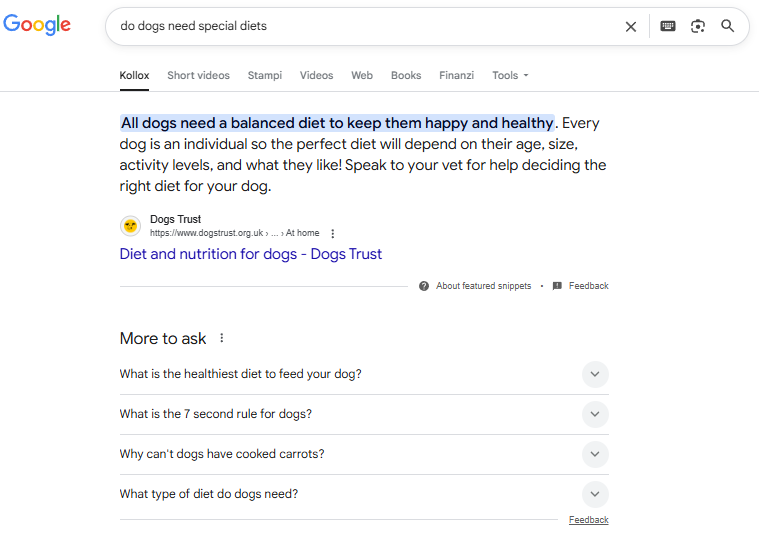
As a result, many sites are seeing declines in click-through rates, especially on informational queries. The impact ripples through analytics and monetization: reports show traffic drops that distort performance metrics, making it harder to attribute success accurately, while affiliate-driven pages lose visibility and conversions since fewer users reach the site to engage with affiliate links. In short, Google’s AI summaries are absorbing a share of the audience that once fueled both traffic numbers and revenue streams.
It is not all bad news
AI tools are enormous and growing rapidly. Major LLM-driven products report explosive user and query growth — ChatGPT and Perplexity are handling billions of queries and hundreds of millions of visits monthly. Studies show AI is already directing real (if small) volumes of referral traffic: a large industry analysis found 63% of websites receive traffic from AI tools, with ChatGPT/Perplexity/Gemini making up the bulk of that traffic — though on average AI contributed roughly 0.17% of monthly site visits in the datasets studied. That number will grow as these tools broaden coverage and integration. At the same time, search-result pages are being re-shaped by generative overviews and AI summaries. Early studies and case analyses show SGE/AI overviews can cause large organic traffic shifts (some verticals saw big percentage drops or redistribution of clicks across domains). In other words: AI can both create referral clicks and replace them with summarized answers — depending on how you appear in the results.
What that means for your website strategy
Two simultaneous facts should drive your plan:
- AI tools can send traffic (and they already do). Optimize to capture that.
- Generative AI can answer queries without a click. Reduce the chance of being “skimmed” out of the click by providing high-signal content AI will reference.
Both goals are complementary — the same principles that help you in classical SEO largely help here, plus a few AI-specific add-ons.
Practical tactics to win AI referrals and protect organic traffic
Build machine-friendly FAQ/concise-answer blocks
AI assistants love short, authoritative answers they can quote. Add clear Q→A blocks on topic pages and dedicate FAQ pages for high-intent queries. Use direct phrasing and one-sentence answers followed by a rich paragraph that expands. Structure: question in an H2, one-sentence answer, then details. This increases the chance an AI will surface your snippet or link.
Implement and expand structured data (Schema.org)
Mark up FAQs, HowTos, articles, products, events, and datasets. Schemas give AI strong signals about what a page is. Over time, pages with correct structured data are more likely to be referenced or surfaced as generative links. (Yes — still worth the dev time.)
Keep classical SEO fundamentals — they still move the needle
Navigation, internal linking, crawlability, page speed, canonicalization, title/meta optimization and topical depth matter now as much as before. AI tools often draw from the same canonical pages that rank in search; if you’re fragile on fundamentals you’ll be missed by both search engines and AI.
Prioritize E-E-A-T and brand signals
Generative answers prefer authoritative, accurate sources. Strengthen author bios, citations, primary data, and brand mentions. Branded, trustworthy content is more likely to be recommended or linked by AI — and brand strength helps preserve clicks when SERPs compress.
Produce concise factual assets (data, explainer bullets, one-page guides)
AI loves reputable facts and short explainers it can quote. Publish single-page resources (cheat-sheets, statistics with source links, downloadable one-pagers) that are easy for a model to reference. Primary data (your own studies, surveys) is gold.
Optimize for the “post-click” experience
When AI does refer a user to your site, make the first 3–7 seconds count: clear headline alignment with the user’s query, jump-to answers, and signposts (like an in-page table of contents). Reduce bounce, increase time-on-page and conversions.
Track AI referrals and create a GA4 AI channel
AI referrals aren’t always visible in traditional channel reports. Configure GA4 (custom channel grouping or UTM patterns for your API partners) to surface AI-driven visits and measure outcomes. A growing number of guides explain how to track AI-origin traffic so you can measure ROI. linkedin.com+1
Risk management: what to watch for
- SERP displacement: studies show some sites saw dramatic traffic declines where AI overviews appeared — monitor your high-volume pages closely.
- Loss of context/click: AI summaries sometimes answer the user fully — reduce this risk by creating compelling reasons to click (tools, calculators, datasets, downloads).
- Brand attribution: AI answers may list many sources but not always click through; brand-building (PR, backlinks, citations) remains critical. Guardian and other reporting have flagged serious audience drops for news publishers after AI-overviews were introduced, which underscores urgency.
Quick 10-point checklist (do this this quarter)
- Add FAQ blocks to top 50 informational pages.
- Audit and add Schema for FAQ, Article, Product, HowTo where relevant.
- Run a content gap analysis for “concise answer” queries your brand should own.
- Improve internal linking and navigation on priority hubs.
- Speed audit: aim for LCP ≤ 2.5s and < 2s interactive time.
- Publish 1 original data asset (study/benchmarks) and promote it for citations.
- Update author bios & cite sources everywhere (E-E-A-T).
- Create GA4 custom channel/tagging to capture AI referrals. linkedin.com
- Run experiments: convert 10 pages to answer-first format and measure change.
- Monitor: weekly checks on top 100 pages for traffic shifts and query coverage.

10 Digital Marketing Trends to Watch in 2023
As digital marketing continues to evolve, businesses and marketers must stay up-to-date with the latest trends and strategies to remain competitive in the industry. With 2023 just starting, it’s time to start looking ahead to the digital marketing trends that will shape the coming year.
Here are 10 digital marketing trends to watch in 2023, based on personal experience and industry insights:
- Artificial Intelligence (AI) and Machine Learning: AI and machine learning are revolutionizing the way we approach digital marketing. These technologies can analyze customer data, predict consumer behavior, and personalize marketing messages for maximum impact. AI-powered chatbots and virtual assistants are also becoming increasingly popular for customer service and support.
- Voice Search Optimization: With the rise of voice-activated assistants like Siri and Alexa, optimizing for voice search is becoming more important. Marketers should focus on creating conversational content that matches the way people speak and answers the questions they’re most likely to ask.
- Augmented Reality (AR) and Virtual Reality (VR): AR and VR are transforming the way consumers interact with brands. Marketers can use these technologies to create immersive brand experiences that engage and entertain customers.
- Video Marketing: Video marketing continues to be a powerful tool for reaching and engaging audiences. From social media ads to explainer videos, video content can drive conversions and increase brand awareness.
- Micro-Moments: Consumers today have short attention spans and limited time. Marketers can capitalize on these “micro-moments” by delivering quick, relevant, and personalized messages across various channels, such as social media, email, and mobile apps.
- Personalization: Personalization has become essential in digital marketing. By using customer data and AI-powered tools, marketers can deliver tailored messages and offers that resonate with individual consumers.
- Interactive Content: Interactive content, such as quizzes, polls, and surveys, can increase engagement and drive conversions. This type of content encourages participation and makes the user experience more enjoyable.
- Influencer Marketing: Influencer marketing continues to be an effective way to reach new audiences and build brand awareness. Marketers should focus on partnering with influencers who align with their brand values and have engaged followers.
- Sustainable Marketing: As consumers become more environmentally conscious, brands are looking for ways to market their products and services in a sustainable and ethical way. This includes using eco-friendly materials, reducing waste, and supporting social causes.
- Privacy and Security: With the increasing importance of data privacy and security, businesses must take measures to protect consumer data and build trust. Marketers should be transparent about their data collection and usage policies and comply with privacy regulations.
While these trends can help businesses stay ahead in the digital marketing game, it’s important to avoid some common pitfalls. Focusing solely on vanity metrics, such as likes and followers, can lead to poor return on investment (ROI) and high conversion costs. Instead, marketers should focus on metrics that indicate real business outcomes, such as lead generation and customer acquisition. Additionally, neglecting mobile optimization can lead to a poor user experience and lower search engine rankings.
In conclusion, staying up-to-date with the latest digital marketing trends is essential for businesses and marketers to remain competitive in the industry. By incorporating these trends into their marketing strategies and avoiding common pitfalls, businesses can drive engagement, increase conversions, and achieve their marketing goals.

Is search engine optimisation dead? – Asking a bot
The hype behind open AI latest release – ChatGPT is nothing but expected. We have been running tests on this tool all night long and believe that is has the potential of answering the holygrail of all marketing questions.
We asked ChatGPT is search engine optimisation is dead and this is what it told us. We have been asking this question to several marketing experts and in our opinion this answer is worth considering.
No, search engine optimization (SEO) is not dead. SEO is the practice of optimizing a website to rank well in search engine results pages (SERPs) and improve the visibility of a website or web page in organic (non-paid) search engine results. SEO is an important part of digital marketing because it helps to drive traffic to websites and can be an effective way to attract potential customers.
There have been many changes and updates to search engine algorithms over the years, and SEO strategies have evolved as a result. However, the principles of SEO remain the same: to create high-quality content that is relevant to the user, to use relevant keywords in the content and website structure, and to build high-quality backlinks from other websites.
SEO is still an important part of online marketing, and it is not going away anytime soon. In fact, with the increasing importance of online presence for businesses, the demand for SEO is likely to continue to grow. If you want to succeed online, it is important to have a well-optimized website that is easy for search engines to understand and rank well in search results.
What will be the google’s answer to this powerful tool? Search engine optimisation is definitely not dead but we strongly believe these improvements in language processing will revolutionize the way people create and consume content.
slot gacor
slot gacor
togel online
slot resmi
slot gacor
slot gacor
slot gacor
togel
link togel
situs togel resmi
situs toto
slot gacor
monperatoto
slot gacor
situs slot

How to tune Google Search for Local Search
Did you know that Google search engine is localized? Yes, that means that if you are using the google search engine from different countries then you are likely to get different search results for the same keyword. This is great news if you are offering services within your region, but not so good if you have an international reach.
Localisation for search engines
If your main audience target is restricted to one particular location, for example, most of your services are for clients in your region example Malta, then localisation is a great thing to take advantage of. Focusing your search engine efforts on a particular region will allow you to compete with fewer websites and make your race for the top 3 keyword position an easier goal.
How to localise for search engines
There are various ways how to signal google search engine that you are mainly focusing on a particular region. For example, several of our local clients are based in Malta we often suggest several updates to the site and of the site so that we get better results for google searches when done from Malta.
Some of the most effective tactics include
1. Use a localised specific domain
Even if your main domain is a .com or .org, using a local domain TLD – for example .com.mt for Malta will help you rank better on the local search engine. Domains are a good return on investment when it comes to search engine improvements. As domains are cheap to buy in the region of €20 per year from any domain registrar like name cheap or go daddy.
2. Host the server within the local geographic region when possible
Other not so straightforward option is to have your hosting server located in the same region or at least close. This could be can be difficult to achieve as at webcalibrate we suggest going for a more reliable server than restricting your options to the server location. If you are using Azure hosting it is simple to change server region by changing a simple configuration, but the list of regions is limited
3. Fine-tune content by using “Malta” when creating new blog articles
This is the most effective way as when new content is added to the site it should take into consideration several SEO rules so that you make the best out of your content. At webcalibrate, we offer post SEO review services that will check any blog post for the right keywords, links, and HTML structure.
4. Localisation withing the region by writing content broken down further at regional level
This SEO tactic works when your services are purely regional. For example, one of our clients is in the Real-estate business we further grouped his property pages by region down to towns and villages. We used this grouping for specific region pages which gave us an edge for ranking keywords that were more region specific.
5. Tune your google business profile
Google business profile is a great tool for signaling google certain information about your business. We always suggest having a business profile updated, mainly the business location as this will allow you to signal the search engine that this is your main area of operation.
6. Inbound links
Getting inbound links is critical for any search engine ranking. What we suggest is that you make an extra effort to get links for local sources, this will give you more authority within that area.
monperatoto
monperatoto
slot gacor
monperatoto
monperatoto
monperatoto
slot gacor
monperatoto
monperatoto
monperatoto
monperatoto
togel online

Digital Marketing and Cost to conversion
Digital Marketing and Cost to conversion
At webcalibrate digital marketing agency we believe that promoting your products and services is much more effective if you use multiple marketing channels. This is effective for traditional marketing like radio adverts, ads in newspapers, tv ads, and also on digital channels. Digital channels might include social media, youtube, email, SMS, and other digital ads like pay-per-click.
This is a no-brainer the more your audience is bombarded by how great your product or service is the more trust they will put and confidence when purchasing. Trust is a perceived belief and is hard to measure, yet there are ways to work out if a marketing campaign is indeed returning its effort.
One important thing to do before you start burning all your marketing budget and contacting the various promotion companies is to think retrospectively about how you will measure the return on your investment. The first thing to do is to understand what the costs are, both direct and hidden for your marketing campaign. What is the durability of the campaign and how do you plan to measure the return also known as the goal.
Marketing Costs
To understand your marketing costs you need to factor in the initial cost for the advert, and also the hidden costs. These hidden costs might be related to design and management time for example to create the advert and any ongoing and recurring fees. Once you manage to convert the total marketing effort into an actual cost that will be your first step toward understanding the effectiveness of your marketing campaign.
Conversion Goals
Next you will need a way to measure the campaign effectiveness. This can be tricky depending on the type of service or product you are selling. For example, if you are selling online your ultimate goal is the payment transaction and with tools like google analytics this can be easily tracked, but if you are running a consultancy business not all leads will turn into an immediate sale. In this type of scenario, a goal could be a contact from a lead like clicking on the call or submitting the contact form.
Actual Return
Using the conversion goals, you have a clear indication of what your campaign efforts are resulting in. This should be converted to actual profits, if you are selling a product the profits should be clear. In cases where you are selling a complex service like business to business or consultancy then you can use an average based on the value of the lead or the effort required to get such lead using other channels. For example, if your business to business lead is likely to secure 200K deal but converting such a lead will take much more effort you can assume that that lead is potentially worth a percentage of the business generated. Another way to calculate the return on such value is to compare it to costs from other channels. For example, setting up a stand in an international fair generated x number of leads and costs y. Thus, I can assume that a similar lead interaction would otherwise cost me Y divided by X.
Other things that need to be factored in are bonus costs and infrastructure. If you are giving a bonus to make your campaign more effective this needs to be taken into consideration and subtracted from your actual return.
Duration of the campaign
For us to measure the effective return on investment you will need a start and end date for your campaign. While some marketing channels like pay-per-click ads tend to give an immediate return other marketing channels like search engine optimisation and radio adverts are normally effective over a period of time. For such channels, we would suggest that you average your conversion goals over a longer period of time and then use that average as a monthly goal example 6 month conversion total divided by 6.
Cost to conversion
Once you have the actual cost and conversion return the cost per conversion is easy to work out this is the profit over costs. For example, running a Facebook marketing campaign capped at €300 per month plus agency fee and designer over 6 months. In total I paid €2700 and directly from this campaign I sold 60 products at a profit of 50 euros per sale.
Understanding your Cost to conversion
Once you do this exercise you know your cost to conversion. If your cost to conversion is positive and high you need to do it more. If your facebook adverts are returning enough profit we would suggest spending more on such ads because it is likely you will increase your return. If you are experiencing low or even negative returns, don’t panic. Here you have learned a valuable lesson that will work to your advantage. The actions to consider are
- Should we focus on other channels that might result in a lower cost
- Should tune our marketing campaign to be more effective
- Are we underselling our product or service at the right price
monperatoto
monperatoto
slot gacor
monperatoto
monperatoto
monperatoto
slot gacor
monperatoto
monperatoto
monperatoto
monperatoto
togel online
slot gacor
slot gacor
togel online
slot resmi
slot gacor
slot gacor
slot gacor
togel
link togel
situs togel resmi
situs toto
slot gacor
monperatoto
slot gacor
situs slot